













Quantum computers become reality
Large sums of money are currently being invested in the development of knowledge and infrastructure of quantum technologies. To name two examples: Two billion euros as part of the German Federal Ministry of Economics and Technology's economic stimulus and future package adopted in 2021, $15 billion spread over the next five years in a current program by the Chinese government. Commercial enterprises are also turning to the topic – especially since quantum computing capacities are becoming more readily available and new records in performance are constantly being set. Finally, major cloud providers such as AWS (with Amazon Braket) and Google are already offering any of their customers the ability to program and use real quantum computers themselves.
In the following, Eva Ess (project lead in the Automotive & Manufacturing industry) asks Thomas Klemm, our expert for quantum computing, exciting questions about how he assesses the potential of this new type of computing technology. In the msg group, Thomas Klemm is pursuing this topic and advises companies on possible applications of quantum computing.
Everyone is talking about quantum computing as a “game changer” because of its expected future and added-value potential in business and politics. How do companies such as BMW and VW currently positioning themselves on the market?
Our customers are also investing to benefit from the expected gigantic potential for added value. Volkswagen already started involving themselves intensively with this topic a good five years ago. In selected specialist departments and by founding a specialized subsidiary, VW Data Lab. BMW took a similar path last year and founded the QUTAC consortium with nine partner companies. And of course the topic has also arrived in innovation management at BMW. This is demonstrated by the latest crowd innovation challenge, which focused on possible applications of quantum computing and in which we were involved. So there's a lot going on.
Is this simply the latest hype? What is so special about this totally “different” type of machine computing?
No, by no means is it "just the latest hype". It is:
- a different type of machine computing, as you rightly say. Quantum computing is not just a bit faster, but fundamentally new and different in that it does not compute with simple numbers – with bits and bytes – but with quantum-physical states. The special properties of the “qubits”, which serve as carriers of quantum information, open up fundamentally new approaches to familiar problems that are difficult or impossible to solve today, with completely new types of algorithms, for example.
- The main difference to today’s computers lies precisely in these quantum algorithms. Thanks to the specific properties of qubits, a quantum algorithm can process all possible solutions of a problem simultaneously. This leads to an enormously high computational parallelism. One example: If I want to find a particular phone number in a phone book with four million entries using a standard algorithm, I would have to read an average of two million phone numbers and compared them with the number I'm looking for. With a quantum algorithm (the well-known Grover algorithm), just 2,000 steps would be sufficient.
- This gives rise to completely new hopes associated with quantum computing. We are thinking about problems that, for current computers, require extremely high resources because of their computer architecture or which cannot even be solved within a reasonable period of time. Hopes are well founded that quantum computing and its fundamentally different way of computing will crack such problems – even if we still face major challenges on the way to their fulfillment. Looking at current progress, I am convinced that we will see a number of groundbreaking applications as early as within the next two to five years. Incidentally, we are also talking here about quite different applications that go beyond machine problem-solving, such as quantum teleportation or quantum cryptography, in other words the secure transfer of information.
Back to computing: How can we imagine the computational method of a quantum computer to increase today's computing power in such a way?
To do this, we need to delve a little into the mysteries of quantum physics.
A quantum computer does not serially process a sequence of single numbers like today's computers (like any kind of Turing machine), but works - as said before - with quantum states of microscopically small systems. As you surely remember from your physics lessons, there are such things as Heisenberg's uncertainty principle, the wave–particle duality or other scary concepts. The background of this is: As long as I don't ask a quantum system about its state by a measurement, it can take as state any mix of all possible states. We can then "compute" with this mix by physically influencing it, for example by rotating the atoms used for the quantum computer (something like in an MRI scanner). Only after we have performed such operations, do we perform a measurement and thus force the system to assume a certain state, a result. Sounds pretty weird, and when Richard Feynman - one of the great physicists of the 20th century - made the relevant proposal for such extremely complex physical experiments almost exactly 40 years ago, we could only dream of it.
What exactly is the advantage of computing with quantum states (instead of “real” figures”)?
The quantum computer works with such mixed quantum states. Mathematically, this means nothing else than that I can calculate with linear combinations of the "pure" states. In a single computational step, all possible solutions are then processed simultaneously. This is the basis for the enormous parallelism that a quantum computer is capable of.
Small numerical example: How complex the quantum states of a quantum computer can be depends on the number of mentioned qubits it can work with. This is “simply” the counterpart to the bits of normal computers, because a qubit has two quantum statuses (0 and 1, so to speak). With 10 of these qubits, I can consider 1,024 possible values in one calculation at the same time; with 20 qubits, there are already more than one million possible values. Today, we are at about 100 qubits. Next year, IBM wants to break through the 1,000 qubit mark and at the end of the decade we could be at one million qubits. You can now calculate for yourself how many solutions can be computed simultaneously with this.
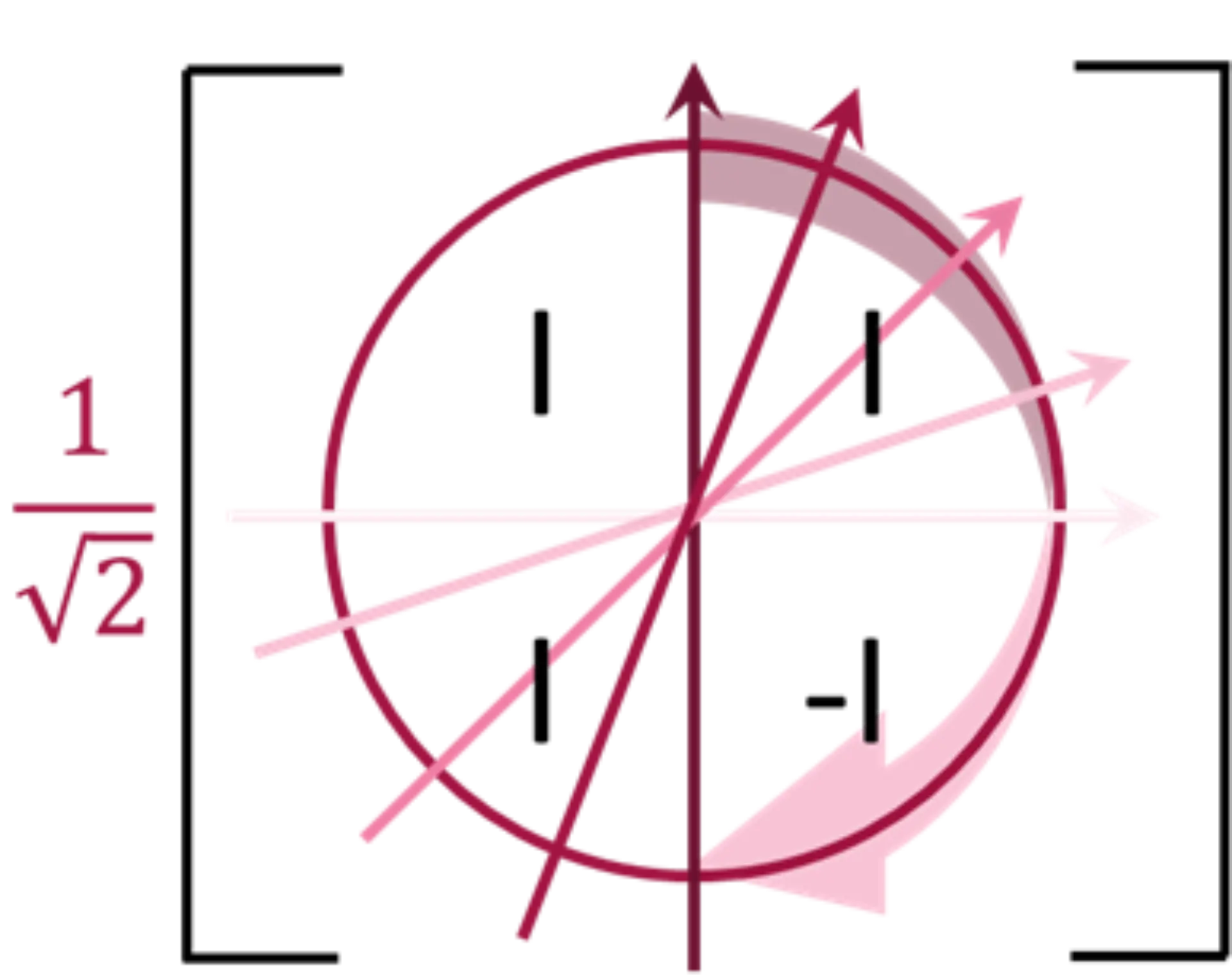
Source: https://www.fokus.fraunhofer.de/de/sqc/quantencomputing
That is the reason for the high parallelism of quantum computing, and why problems can occur in the area of solvability that far overtax today’s computing capacity – especially those notorious problems that computer scientists among us have come to know as “NP hard”. But it would also leave vulnerable much of the encryption used today in e-commerce, cryptocurrencies, and electronic communications (which is why many a government agency is interested in quantum technologies).
Key Facts by Stephan Melzer, Executive Project Manager, msg
- Quantum computing can revolutionize IT like no other technology because it enables a fundamentally new kind of computing.
- Quantum computers will be available for industrial use in the near future.
- If complex algorithm are used in my core processes, it makes sense to start thinking about possible use scenarios today.
It is precisely the use cases of quantum computing that we want to address in the continuation of this interview.